Trends


Let's cut through the advertising noise.
Every year brings another wave of "the future of advertising" articles that read like press releases. AI will change everything. Personalization is king. Blah, blah, blah. You've heard it all before — and most of it is vague enough to have been written in 2019.
Here's what's different about this one: every trend below is backed by hard numbers from the organizations actually tracking where ad dollars go — eMarketer, IAB, Gartner, McKinsey, and the companies building the infrastructure. Not trend forecasters guessing. People counting.
Top advertising trends going into 2026:
Let's get into it.
Here's a number that tells you where advertising budgets are moving: US retail media ad spending is hitting $69.33 billion in 2026, up from $58.79 billion in 2025, according to eMarketer's retail media forecast. That makes retail media the fastest-growing major ad channel — and it's not slowing down.
The appeal is straightforward: retail media networks sit on first-party purchase data that no other channel can match. When you run an ad on Amazon, you know exactly who bought what, when, and how much they spent. That closed-loop measurement is irresistible in a privacy-first world. And BCG estimates the global retail media market is reaching $100 billion in 2026.
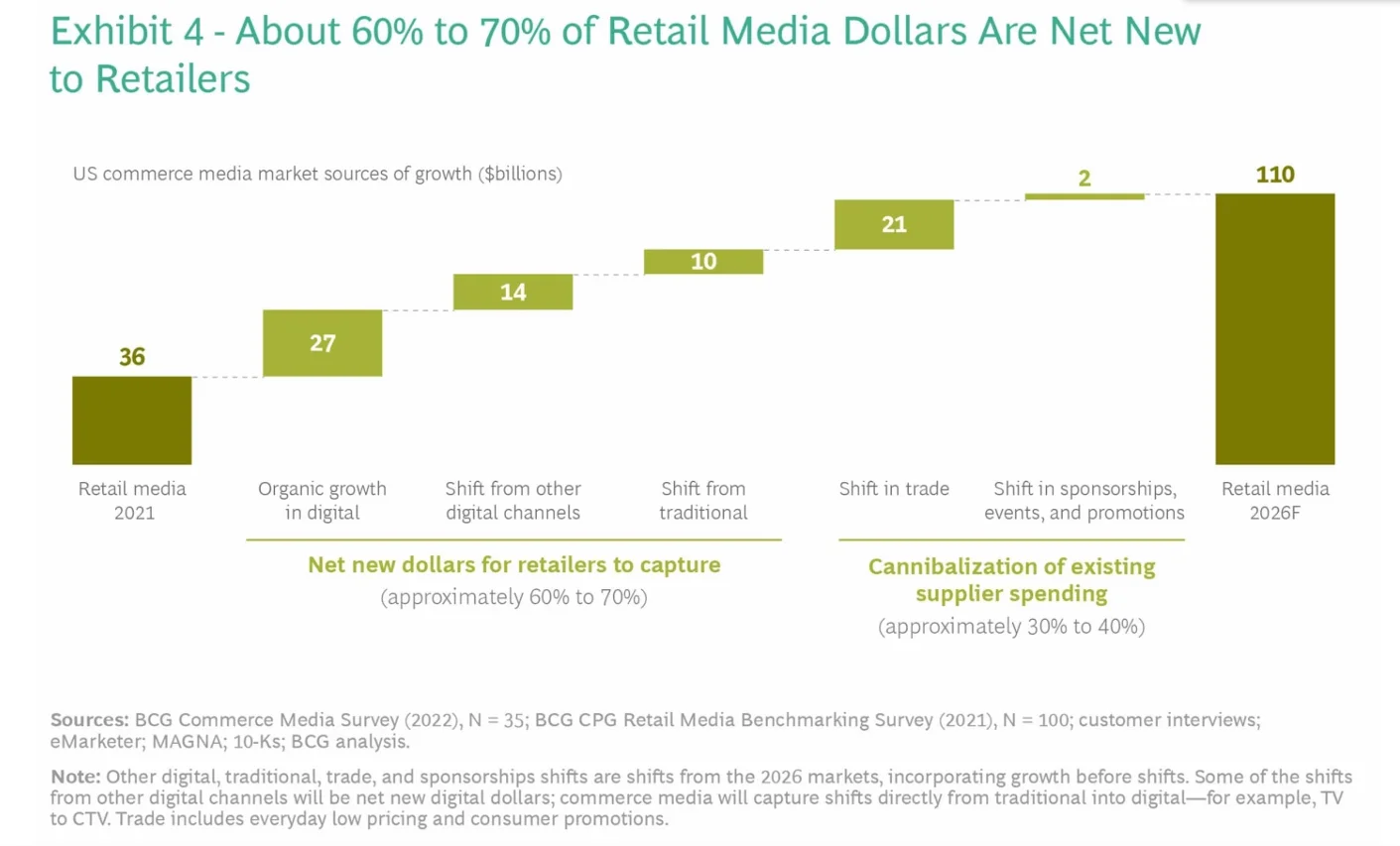
What's especially interesting is who's entering the space. It's no longer just retailers.
Amazon Ads now represents the third-largest digital advertising platform globally, generating over $56 billion in annual ad revenue. Their data advantage — knowing what 300+ million active customers actually buy — creates a targeting moat that Google and Meta can't replicate.
Chase Media Solutions launched in April 2024, turning purchase data from 80 million Chase cardholders into an advertising platform. A bank becoming an ad network. That's how far retail media has expanded beyond retail.
Walmart Connect reported its advertising business grew nearly 30% in fiscal 2024, with the number of active advertisers growing 50%. Off-site retail media is growing at 2x the rate of on-site, according to eMarketer — meaning retail data is powering ads across the entire open web, not just retailer websites.
By 2028, retail media is forecast to account for one-quarter of all digital ad spending. The next frontier is CTV: retail media networks sold an estimated $4.99 billion in CTV ads in 2025, more than doubling to $10.28 billion by 2028.
The bigger story is off-site expansion. Retail data is powering ads across the entire open web — not just on retailer properties.
Expect more non-retail companies (banks, payment platforms, airlines) to launch their own media networks. If you're an advertiser not running retail media campaigns in 2026, you're leaving the highest-signal targeting channel on the table.
The shift from "AI-assisted" to "AI-managed" advertising happened faster than anyone expected.
According to Google's official data, advertisers using AI Max — their latest autonomous campaign system — saw an 18% increase in unique search query categories with conversions and 19% more overall conversions compared to manual setups. Meta reports that Advantage+ Shopping campaigns drove a 32% improvement in ROAS on average.
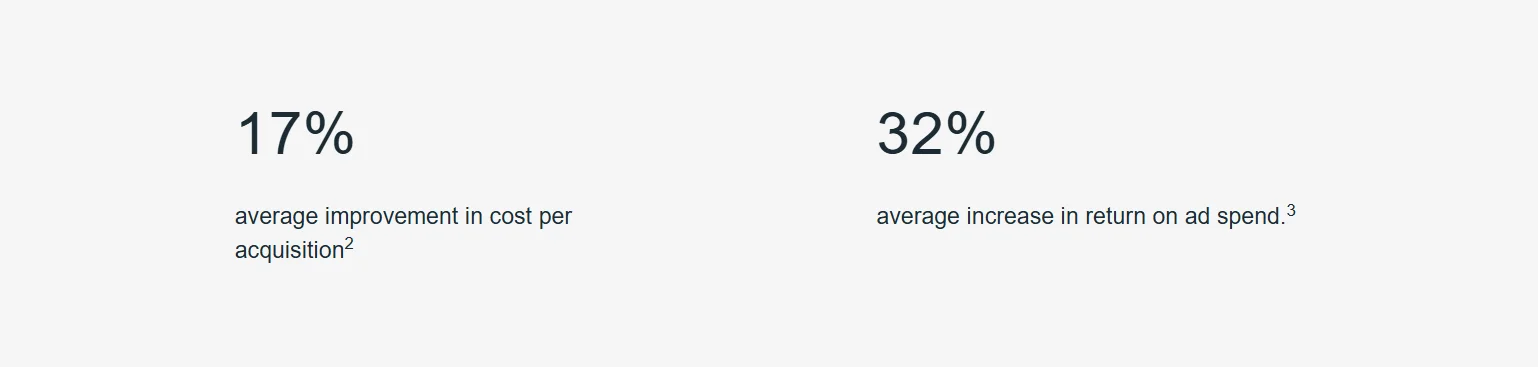
These aren't small optimizations. These are systems that autonomously decide which creative to show, to whom, on what channel, at what bid — and they're consistently outperforming human campaign managers on raw metrics.
Google launched AI Max at Google Marketing Live in May 2025, their next evolution of Performance Max that uses agentic AI to autonomously optimize audiences, bids, and creative across Search, Display, Shopping, and YouTube. The "Power Pack" strategy — Performance Max + Demand Gen + AI Max — now covers the full funnel.
The Trade Desk launched Kokai, an AI-powered media buying platform that uses deep learning to autonomously optimize campaign parameters across channels in real time. It represents a shift from rule-based bidding to genuine machine intelligence.
Salesforce reported that enterprises using Agentforce are seeing 20% lower total cost of ownership through pre-built AI workflows that handle campaign creation, audience building, and budget allocation with minimal human input.
The marketer's role is shifting from operator to orchestrator. Your job isn't optimizing bids anymore — it's training AI systems to understand what success looks like for your business and knowing when to override the machine. According to IAB's 2026 outlook, 96% of ad buyers are now aware of agentic AI for ad buying, and 66% are increasing their focus on it.
The risk? Over-reliance on black-box optimization. Smart advertisers are learning that Performance Max often plateaus and struggles with new customer acquisition at scale.
The winning approach is using autonomous systems selectively — for specific goals — while maintaining human oversight on brand strategy and creative direction. (For a deeper dive into agentic AI beyond advertising, see our generative AI trends for 2026.)
CTV advertising isn't new. What's new is that it's becoming a direct-response channel.
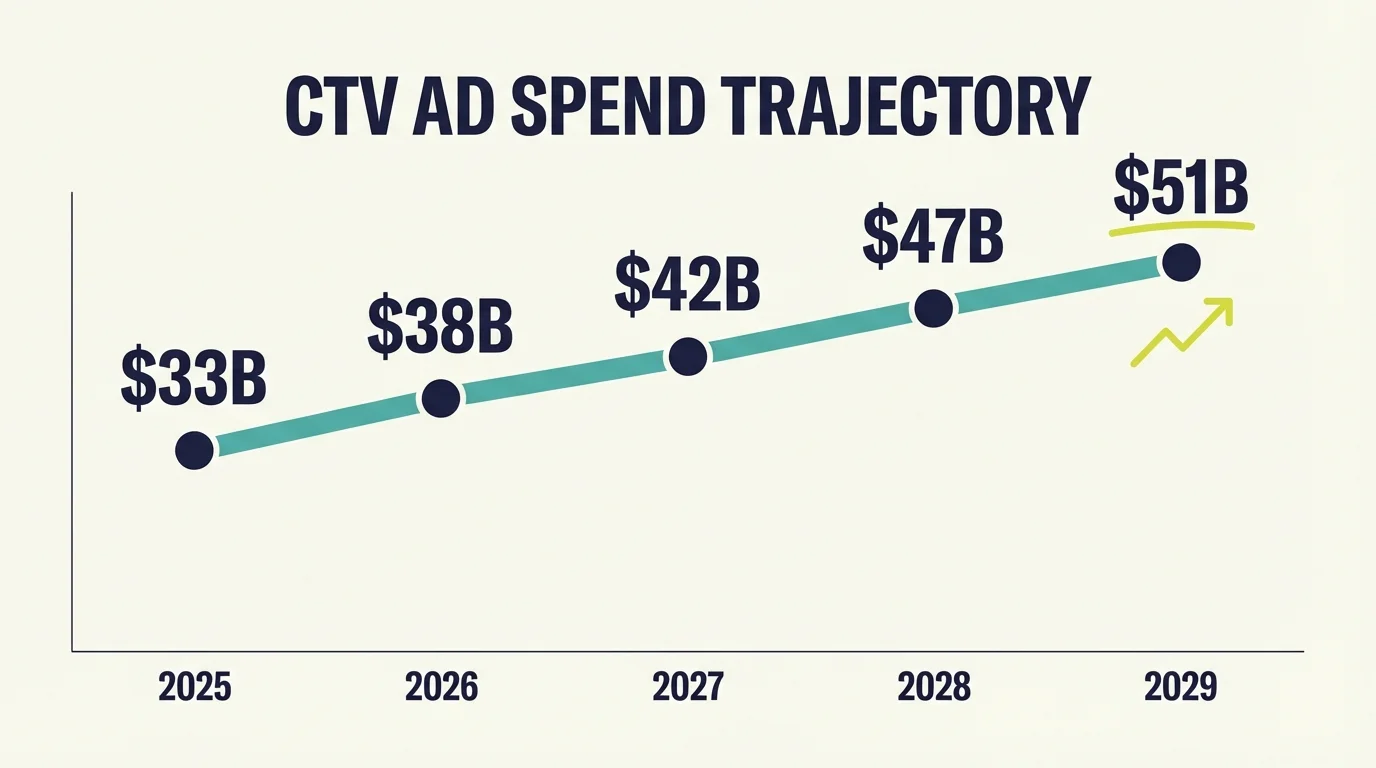
As the market shifts from experimentation to scaled execution, US CTV ad spending is reaching approximately $38 billion in 2026, growing 13.8% year-over-year according to IAB 2026 Ad Spend & Strategy Outlook.
The focus has moved toward high-engagement formats: 57% of ad buyers plan to increase investment in creator and influencer partnerships within CTV, while 45% are upping their focus on shoppable ad formats. Additionally, as measurement matures, 72% of buyers are now prioritizing cross-platform measurement to connect these interactive formats with tangible business outcomes.
Amazon introduced ads on Prime Video in January 2024, reaching over 200 million global subscribers. Their interactive formats include "Add to Cart" overlays that let viewers purchase products directly from the TV screen — collapsing the funnel from awareness to purchase in a single moment.
Roku launched shoppable ad formats including "OK to text" ads and interactive overlays. Roku's platform revenue — primarily advertising — reached $908 million in Q3 2024 alone, growing 15% year-over-year.
Disney expanded interactive ad formats across Disney+, Hulu, and ESPN, including Gateway Shop and trivia formats that transform passive viewing into engagement moments.
YouTube leads the CTV market with nearly 12% share of all CTV ad revenues, driven by $9.21 billion in net CTV ad sales.
By 2028, CTV ad spending is forecast to surpass traditional linear TV for the first time in history, reaching $46.89 billion. The convergence of retail media and CTV is the trend within the trend — one in five CTV ad dollars is projected to flow through retail media networks by 2027.
The absence of universal CTV measurement standards remains a real challenge — there's significant variability in how ads are served, measured, and experienced across platforms. But that's also the opportunity.
Advertisers who invest in cross-platform CTV measurement frameworks now will have a significant head start as this channel matures into the dominant form of TV advertising.
Social commerce isn't an experiment anymore. It's a core sales channel.
According to eMarketer's social commerce forecast, US social commerce sales are surging past $100 billion in 2026 — reaching $100.99 billion, up from $71.62 billion in 2024. Globally, Mordor Intelligence values the social commerce market at $2.11 trillion in 2026, growing at a 29.12% CAGR through 2031.
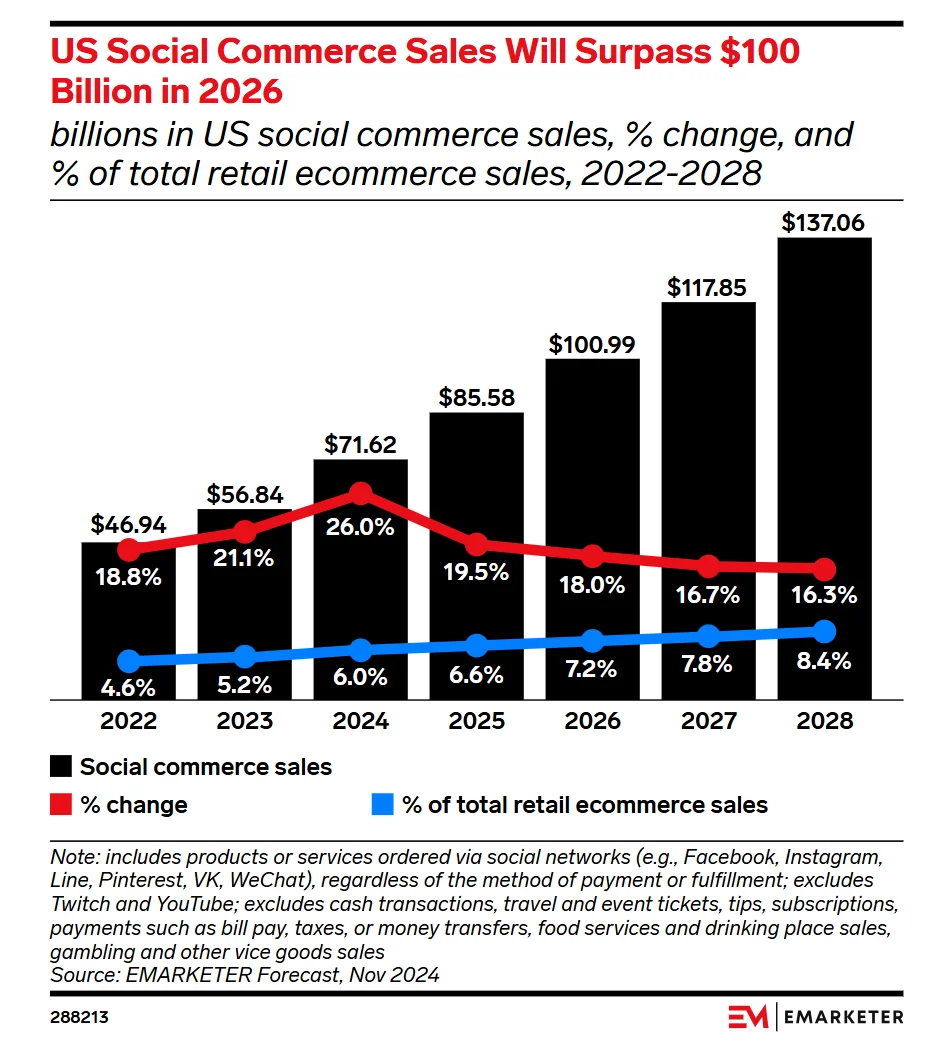
Here's the stat that puts it in perspective: TikTok Shop alone is generating $23.41 billion in US ecommerce sales in 2026 — a 48% increase year-over-year. That gives TikTok Shop a larger US ecommerce business than Target, Costco, Best Buy, or Kroger. (For more on how ecommerce is being reshaped, see our B2B ecommerce trends for 2026.)
TikTok Shop launched full shoppable commerce in the US in September 2023 and scaled to $4.4 billion in US GMV in its first year. The platform has become a full-funnel commerce engine: discovery, consideration, and purchase happen in the same session. An estimated 60% of Gen Z shoppers now discover products through social platforms before visiting traditional stores.
Pinterest launched direct links and shopping API integrations, reporting a 50% increase in shoppable product pins and a 30% increase in outbound clicks to retailers. Pinterest's advantage is intent — users come to the platform already planning purchases.
Instagram (Meta) expanded Shopping with product tags in Reels and Stories and AI-powered product recommendations. However, Meta made a strategic shift — pushing all Shops checkout to external websites globally, acknowledging that driving high-intent traffic to brand sites may work better than in-app checkout for their ecosystem.
The $100 billion US milestone in 2026 is just the beginning. According to Accenture's research, social commerce is growing 3x faster than traditional ecommerce. Millennials drive a third of global social commerce spending, with Gen Z close behind at 29%.
What works on TikTok Shop won't translate directly to Instagram or Pinterest. Each platform has different user intent, different content formats, and different purchasing behaviors.
The brands that win are the ones building platform-specific commerce strategies — not copying and pasting the same approach everywhere. The path from content to purchase needs to feel invisible and native to each environment.
This one changes the advertising playbook more than anything else on this list.
Gartner predicts that by 2028, 33% of online purchases will be autonomously initiated by AI agents on behalf of consumers. Not recommended by AI. Not suggested by AI. Actually purchased by AI agents that evaluate options, compare prices, and execute transactions without the consumer visiting a single product page or seeing a single ad.
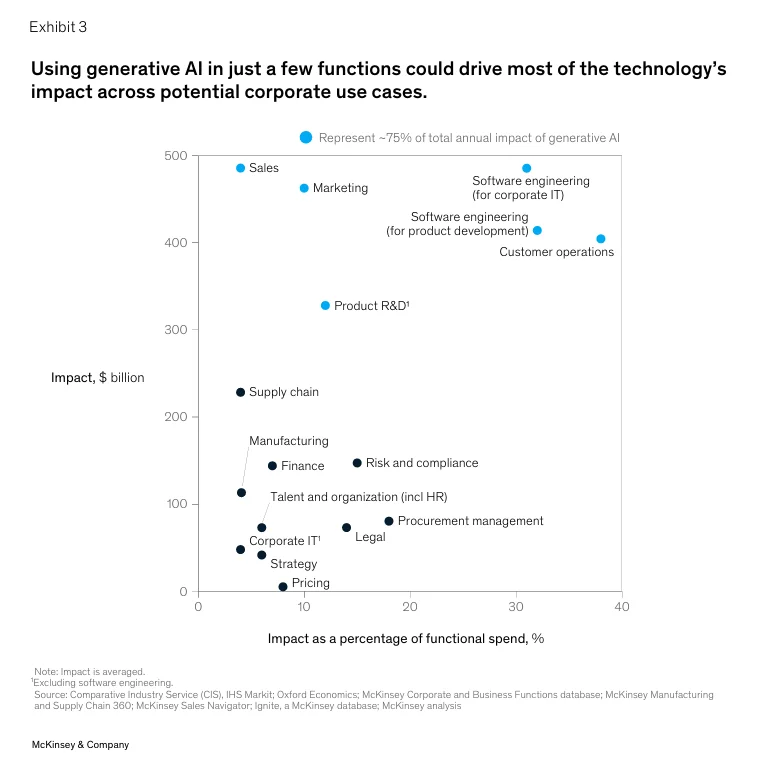
That's an existential shift for advertising. If the customer never sees your ad because an AI agent made the decision, what exactly is your ad strategy optimizing for? McKinsey estimates generative AI could add $400–660 billion in annual value to the marketing and sales function — but much of that value comes from restructuring how discovery works.
Amazon launched Rufus, an AI shopping assistant integrated directly into the Amazon app that answers product questions, compares options, and makes personalized recommendations drawn from Amazon's entire catalog and customer review data. It's not just search — it's a conversational purchasing agent.
Perplexity AI launched "Buy with Pro", allowing users to purchase products directly from AI search results with one-click checkout — no retailer website visit required. The entire discovery-to-purchase journey happens inside the AI interface.
Microsoft Copilot integrated shopping capabilities that enable the AI assistant to research products, compare prices across retailers, and initiate purchases on behalf of users. When the operating system itself becomes a shopping agent, traditional ad surfaces matter less.
Brands need to start optimizing for AI agents, not just human eyeballs. That means structured product data, competitive pricing signals that AI can evaluate, and presence in the training data and product feeds that agents draw from.
The implications for ad spend allocation are massive. If a quarter of purchases bypass traditional ad surfaces entirely by 2028, budgets need to shift toward product feed optimization, AI-readable structured data, and brand signals that influence agent recommendations.
The advertising industry hasn't faced a disruption this fundamental since the shift from print to digital.
Video-to-purchase isn't a novelty feature anymore. It's becoming the default way products are sold online.
McKinsey estimates that livestream commerce is accounting for 10–20% of all ecommerce in 2026, with the global market reaching up to $500 billion. That's not a forecast from a startup pitch deck — that's McKinsey looking at what already happened in China, and 2026 is proving them right.
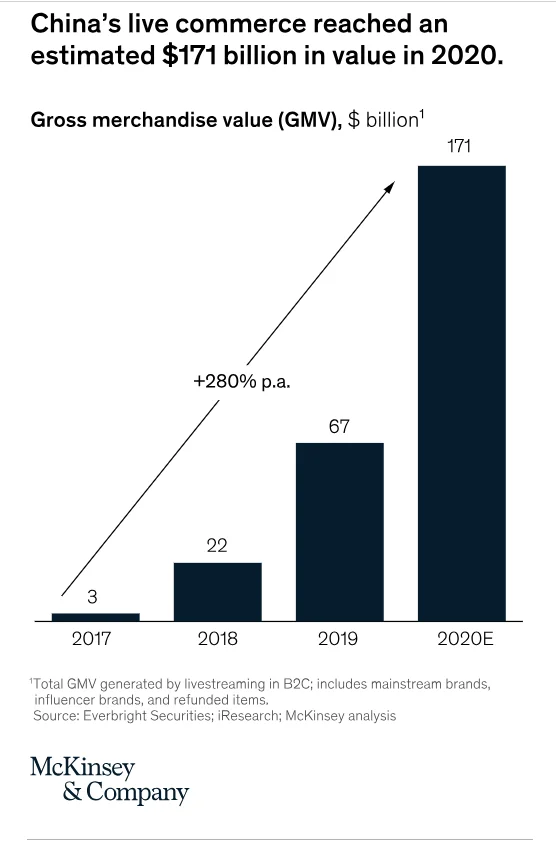
The format works because it collapses the entire funnel. Discovery, consideration, social proof, and purchase all happen in one unbroken session. Google's internal data shows that advertisers who add product feeds to their Video action campaigns achieve over 60% more conversions at a lower cost than those without.
YouTube Shopping partnered with Shopify to enable creators to tag products directly in videos, Shorts, and livestreams with integrated checkout. When a creator with 2 million subscribers demos a product and viewers can buy it without leaving the video, you've removed every friction point in the purchase journey.
Amazon Live built a dedicated livestream commerce platform where influencers and brands host live shopping shows directly on Amazon, with real-time purchasing. It combines Amazon's logistics advantage with the engagement of live content.
TikTok Shop pioneered the integration of in-feed shoppable videos and LIVE Shopping in the US market. The key innovation isn't the technology — it's the behavior shift. Users aren't going to TikTok to shop. They're shopping because the content made them want something they didn't know existed.
Vertical, scrollable, shoppable-by-default video is becoming the standard format for product discovery. AI is accelerating this with dynamic product tagging, personalized recommendations embedded in video, and AR try-before-you-buy moments.
The line between "content" and "commerce" is disappearing — and that's the point.
The most effective commerce in 2026 doesn't feel like shopping. It feels like entertainment that happens to have a buy button. Brands that can create genuinely engaging video content with seamless purchase integration will dominate this format.
The privacy transition is complete. First-party data isn't a nice-to-have — it's the foundation of every functional ad strategy in 2026.
According to IAB's State of Data report, 71% of advertisers are increasing investment in first-party data strategies. Cisco's 2024 Data Privacy Benchmark Study found that organizations investing in privacy see an average 1.6x return on their privacy investments — privacy isn't just compliance, it's competitive advantage.
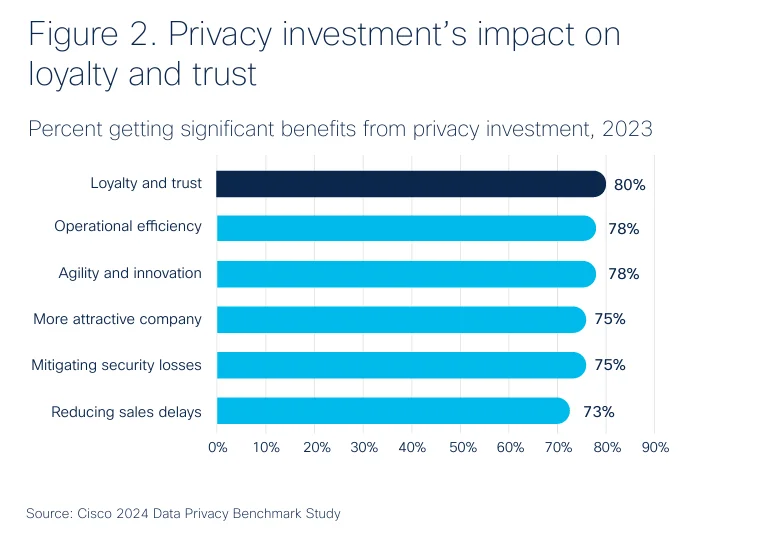
The impact is measurable. Campaigns using first-party data or AI-based contextual targeting deliver 2x higher ROAS compared to third-party targeting methods. With global Apple ATT opt-in rates averaging 38% as of early 2026, and new regulations like the CPPA (effective January 1, 2026), there's no going back.
Google's Privacy Sandbox introduced Topics API, Protected Audiences API, and Attribution Reporting API as privacy-preserving alternatives to cross-site tracking. Rather than killing third-party cookies outright, Google introduced user-choice prompts — but the ecosystem has already moved on.
The Trade Desk developed Unified ID 2.0 (UID2), an open-source identity framework based on encrypted and hashed email addresses. It's been adopted by major publishers and advertisers as the leading cookie-alternative identity solution.
Apple's App Tracking Transparency fundamentally reshaped mobile advertising when it launched with iOS 14.5. The ripple effects are still playing out — Meta famously attributed a $10 billion revenue hit to ATT, forcing the entire industry to rebuild targeting around consented, first-party signals.
Server-to-server event tracking is replacing pixel-based tracking across the board. Solutions like Meta's Conversions API and Google's Enhanced Conversions let advertisers optimize campaigns and attribute conversions without browser cookies.
Your first-party data is your moat now. The brands with direct customer relationships, robust CRM data, and authenticated user bases are running circles around competitors who relied on third-party data they never owned.
Incrementality testing is also making a comeback — it works in a cookieless world because it measures aggregate outcomes, not individual user paths. (We covered the strategic shift to first-party data in depth in our digital marketing trends for 2026.)
AI-driven creative isn't just faster. It's fundamentally better at matching the right message to the right person.
Meta reports that advertisers using Advantage+ Creative — their AI-driven creative optimization — saw up to 12% lower cost per result across campaigns. McKinsey research shows that personalization at scale reduces customer acquisition costs by as much as 50% and increases marketing spend efficiency by 10–30%.
The numbers on DCO specifically are striking: campaigns using dynamic creative optimization deliver 32% higher click-through rates and 56% lower cost per click. When every ad impression is personalized in real time — adjusting copy, imagery, CTA, and layout based on viewer signals — waste drops and relevance climbs.
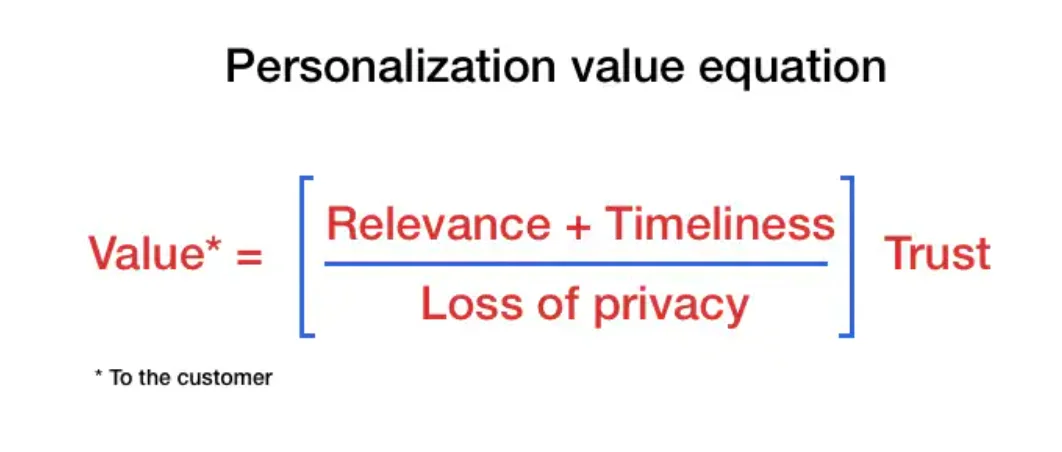
Coca-Cola partnered with OpenAI and Bain to use generative AI for ad creative production at scale through their "Create Real Magic" platform, generating thousands of unique ad variations from a single campaign concept. It's not about replacing creative teams — it's about multiplying their output.
Netflix uses AI-driven dynamic creative to generate personalized artwork for each title displayed to each user, testing thousands of image variants to maximize click-through rates. The show stays the same — the packaging changes for every viewer.
Klarna reported replacing multiple creative agencies with AI tools, using AI to generate marketing images and copy. The result: creative asset production dropped from weeks to days and the company saved an estimated $10 million annually.
By 2026, AI-generated creative variations are becoming standard in every major ad platform. Google is testing AI-generated video and image creation directly within Performance Max. The creative gap between big brands and small businesses is collapsing — a solopreneur with the right AI tools can now produce ad creative that competes with agency output.
But speed without guardrails introduces risk. Poor data paired with AI produces highly visible mistakes — incorrect personalization, off-brand messaging, compliance issues.
The differentiator isn't production quality anymore. It's strategic thinking, brand distinctiveness, and the human judgment to know when AI-generated creative needs a human touch before it goes live.
Here's the paradox of 2026 advertising: AI can produce more content than ever, but audiences trust it less than ever.
According to Billion Dollar Boy's "Muse Two" research, only 26% of consumers now prefer AI-generated creator content — down from 60% in 2023. That's a collapse in trust in just two years.
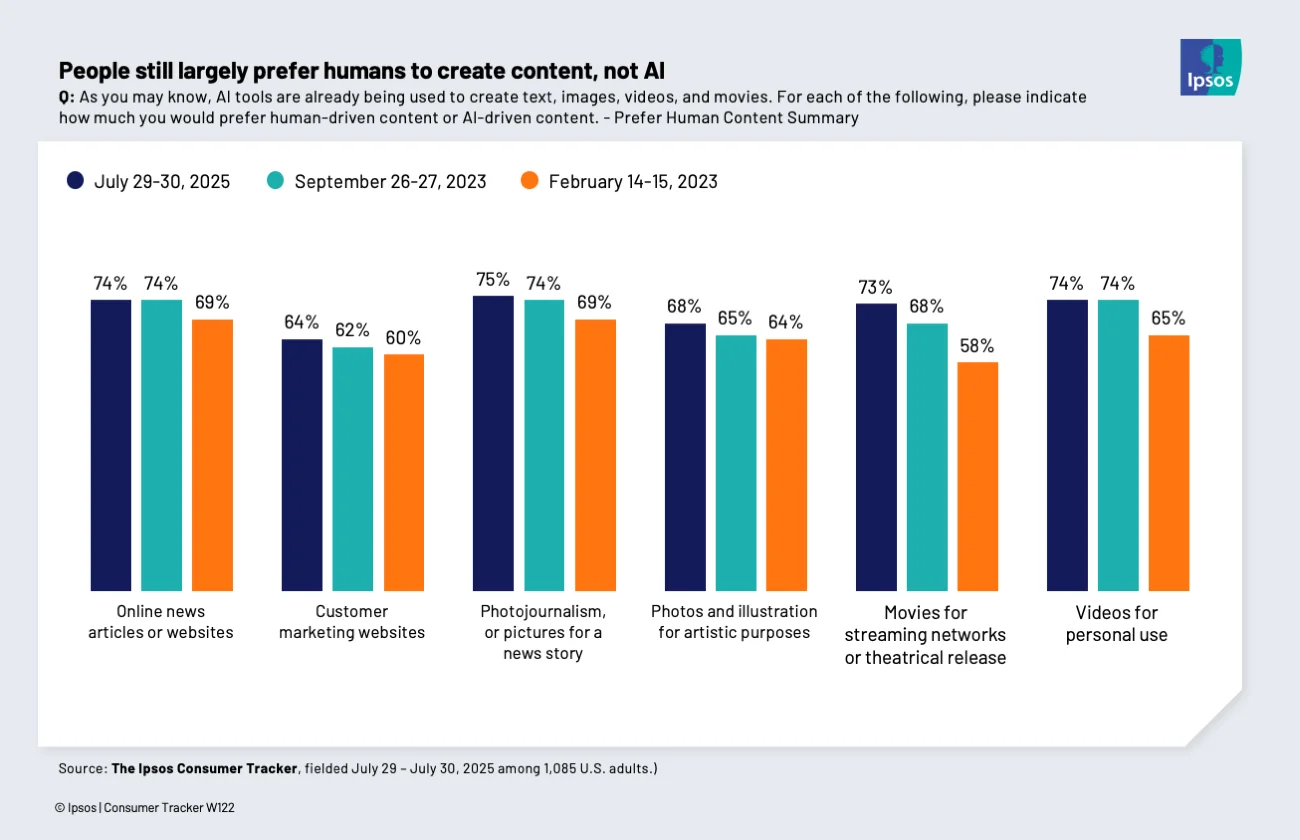
Edelman's 2024 Trust Barometer found that 74% of consumers trust information from "a person like themselves" more than any institutional source. And Sprout Social's Q3 2025 Pulse Survey reports that 52% of social media users are concerned about brands posting AI content without disclosure.
Dove (Unilever) launched "The Code" campaign, publicly pledging never to use AI-generated images to represent real women in its advertising. The campaign generated significant brand trust differentiation — proving that "we don't use AI" can itself be a selling point.
YouTube expanded its "Made with AI" labeling requirements, requiring creators to disclose AI-generated material that could be mistaken for real people or events. Transparency is becoming platform policy, not just best practice.
Reddit positioned itself as an "authenticity-first" platform, leveraging its human-moderated community structure as a differentiator. Reddit's ad revenue grew 56% year-over-year to $315 million in Q3 2024, with advertisers specifically seeking verified human engagement.
The flood of AI-generated content creates a clear opportunity: brands willing to be unmistakably human will stand out. Lo-fi content is outperforming polished production, driving up to twice as many comments.
Expect "verified human" creative and transparent AI-disclosure labeling to become genuine competitive advantages.
The smart play in 2026: use AI for efficiency behind the scenes, but lead with human voices in everything the audience sees. Employee-generated content, creator partnerships rooted in lived experience, and brand storytelling that reflects genuine cultural truth will outperform any amount of AI-polished perfection.
Traditional search — the backbone of digital advertising for two decades — is facing its first existential threat.
Gartner predicts that traditional search engine volume has dropped 25% by 2026 as consumers shift to AI chatbots and virtual agents. As Gartner VP Analyst Alan Antin puts it: "GenAI solutions are becoming substitute answer engines, replacing user queries that previously may have been executed in traditional search engines."
Meanwhile, Amazon reports that they have sold over 500 million Alexa-enabled devices globally, with voice-initiated purchases growing year-over-year. When a consumer asks their AI assistant "order more paper towels" and the AI picks the brand, traditional search advertising never enters the picture.
OpenAI launched ChatGPT Search with shopping features, enabling conversational product discovery and comparison that draws search traffic away from Google. With over 800 million weekly active users, ChatGPT is becoming a product recommendation engine whether brands optimize for it or not.
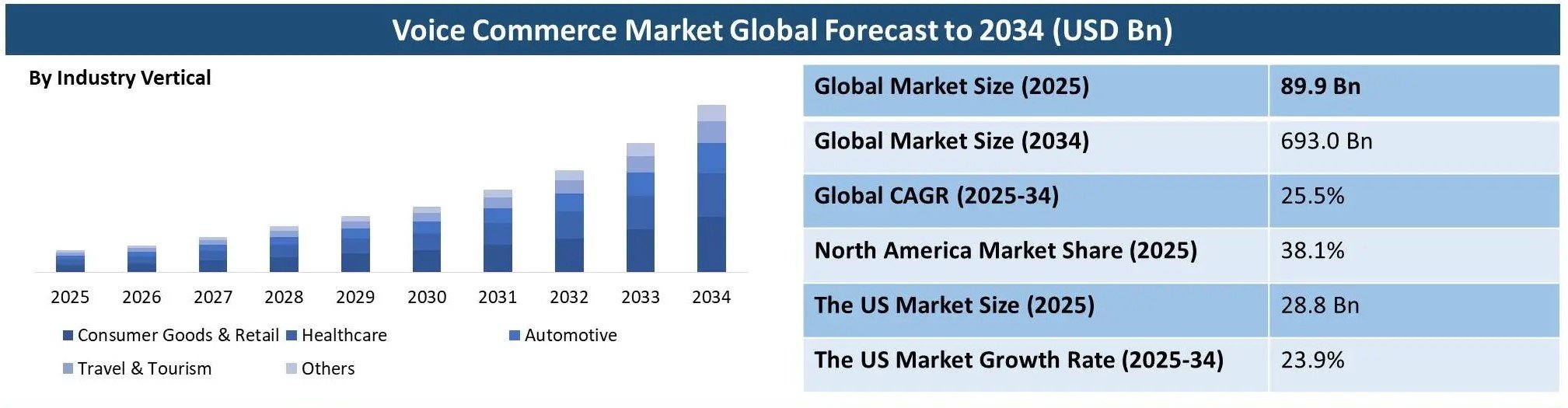
Amazon launched Alexa+, an AI-upgraded voice assistant that enables more conversational and context-aware shopping experiences. The global voice commerce market is forecast to reach $693 billion by 2034 according to Dimension Market Research.
Google launched AI Overviews in Google Search, fundamentally changing how search results appear. AI-generated summaries appear above traditional links, and early data shows CTR drops of 34.5% for organic results when AI Overviews appear.
Answer Engine Optimization (AEO) is becoming a new discipline alongside traditional SEO. Brands need to optimize for how AI assistants interpret and recommend their products — not just how Google ranks their pages.
The brands invisible in ChatGPT, Perplexity, and Alexa responses are invisible to a growing share of consumers. And unlike traditional SEO, AI visibility is unstable — a brand can go from "recommended" to "completely absent" between model updates.
Expect paid ads inside LLM chatbots to emerge in 2026, mirroring how Google gradually monetized organic search results. Start budgeting for it now. (We covered the zero-click crisis in detail in our digital marketing trends for 2026 article.)
Step back and look at these ten trends together, and one pattern is unmistakable: the infrastructure of advertising is being rebuilt from the ground up.
Retail media is creating closed-loop measurement that search and social never could. AI agents are making purchasing decisions that bypass ads entirely. CTV is turning passive viewing into interactive commerce. Social platforms are becoming full-stack retail channels. And privacy regulations have forced a wholesale rebuild of how targeting works.
The advertisers who win in 2026 aren't the ones with the biggest budgets or the fanciest tech stack. They're the ones who understand what's actually happening:
Every trend in this list points the same direction: the foundational skills of advertising — understanding customers, crafting compelling messages, building trust — matter more than ever, even as the tactical execution gets automated.
The tools have changed. The game hasn't.
Want to spot emerging advertising trends before they hit mainstream? Check out our guide on how to identify market trends or explore what's gaining traction on our trends dashboard.
+24,000 Emerging Trends
+4,000 Breakout Apps
+70 Mega Trends
Trend Analysis Tool