Trends


The restaurant industry is having a strange moment.
On one hand, sales hit $1.5 trillion in 2025 — a number that would have seemed absurd back in 2020. On the other hand, 61% of operators reported traffic declines between 2023 and 2024.
Customers are spending, but they're pickier about where. They want experiences, not just meals. They want to know where their food comes from. And increasingly, they expect restaurants to do things that used to be reserved for tech companies.
I'm not here to give you vague predictions about "the future of dining." I'm here to show you what's actually changing right now — backed by numbers from the National Restaurant Association, McKinsey, Deloitte, Euromonitor, and others tracking this industry in real time.
The 12 restaurant trends reshaping 2026:
Let's get into it.
Here's the shift that changes everything: AI is moving from "tool restaurants might use" to "system that runs the guest experience."
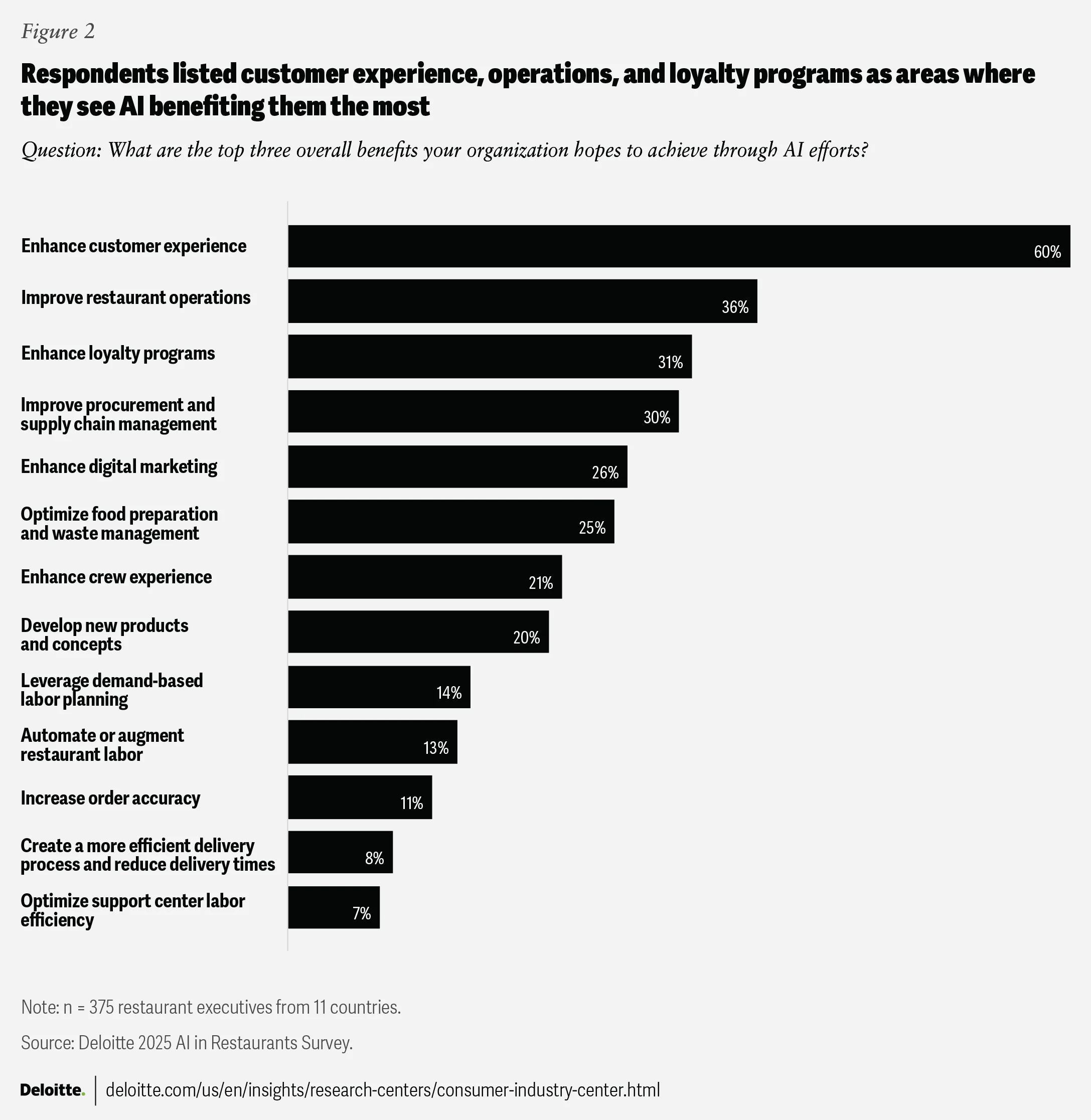
According to a 2025 Deloitte survey, 82% of restaurant executives plan to increase AI spending, with customer experience (60%) and loyalty (31%) cited as the top areas of impact. This isn't experimentation anymore — it's strategic priority.
The adoption numbers are striking. According to Toast's 2025 AI in Restaurants Survey, 86% of operators report they're comfortable using AI, and 81% plan to increase their use in the future. Roughly one-third of restaurant operators already use AI technologies, while nearly half plan to adopt them in the near term.
Panera Bread's MyPanera loyalty program has grown to over 52 million members by providing personalized experiences that increase in value based on visit frequency — a "surprise and delight" model rather than typical points-based systems.
Pizza and high-volume takeout categories deployed AI first and are now 12-18 months ahead — seeing 26%+ phone revenue increases through AI-driven ordering and personalization.
Systems supporting micro-segmented bundles and pricing have increased average check size by 7% and improved attach rates for desserts and add-ons, according to QSR Web's analysis.
McKinsey research shows effective personalization boosts customer retention rates by 20-30%, with average order values rising 10-15% compared to standard experiences.
In 2026, "AI moved from primarily helping with behind-the-scenes analytics to being woven into guest-facing experiences," as Steven Fine, GM of restaurant division at PolyAI, notes. Expect pilot projects to become system-wide rollouts — what Fine calls "AI adoption hitting escape velocity."
The question isn't whether to use AI personalization. It's how to stay relevant when every competitor has it too.
Ghost kitchens aren't the desperate pandemic play they once seemed. They're an $88 billion market that's just getting started.
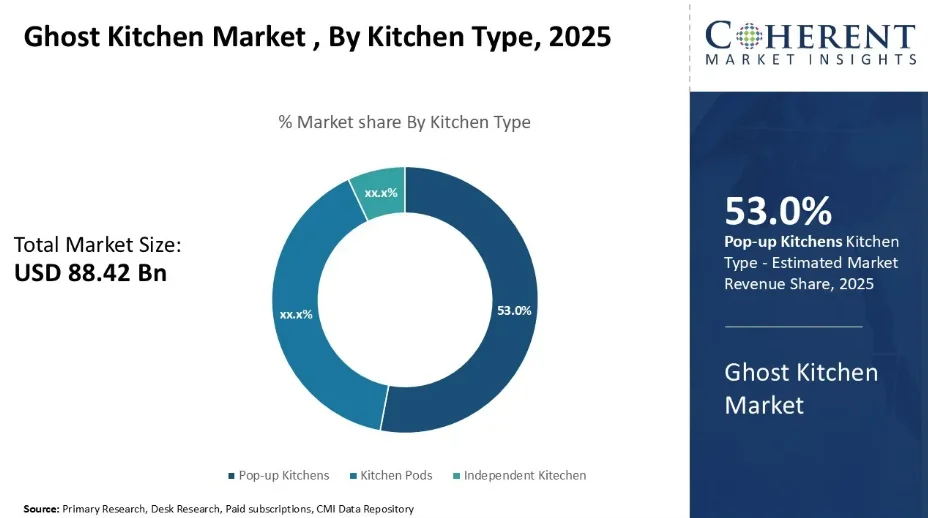
According to Coherent Market Insights, the ghost kitchen market was valued at USD 88.42 billion in 2025 and is projected to reach USD 196.69 billion by 2032, growing at a 12.1% CAGR. Euromonitor projects the category could represent a $1 trillion global opportunity by 2030.
The infrastructure has matured. The U.S. currently has 1,500 ghost kitchens, putting it ahead of the U.K. (750) but behind China (7,500+) and India (3,500+).
Chipotle, Five Guys, and even retailers like Walmart and Kroger have entered the ghost kitchen space — though early enthusiasm has been tempered by operational realities. Wendy's scaled back its REEF partnership from 700 planned units to just 100-150, primarily in international markets, after U.S. locations underperformed.
Multi-brand virtual food halls are replacing single-concept operations. AI-optimized delivery-only concepts can now adjust menus, pricing, and even branding based on real-time demand data.
Kitchen United, CloudKitchens, and REEF Technology have built sophisticated logistics networks that make ghost kitchens viable for brands of all sizes.
According to the National Restaurant Association, more than half of diners consider takeout and delivery essential to the way they live. Online ordering now accounts for roughly 40% of total restaurant sales, with delivery representing 27% of all orders across restaurants and convenience stores.
The 2026 ghost kitchen isn't a stripped-down delivery operation.
It's a sophisticated, data-driven business that can spin up new concepts, test menus, and scale without the overhead of traditional restaurant real estate. (For how supply chain software is enabling this transformation, see our supply chain software trends for 2026.)
Farm-to-table was the 2010s. Regenerative sourcing is the 2020s.
More restaurants are turning to regenerative agriculture for ingredient sourcing — farming methods that actively restore soil health, increase biodiversity, and improve water conservation.
According to Penn State Extension's 2025 trends report, consumers are more conscious than ever about where their food comes from and look for products grown close to home using practices that restore rather than deplete the environment.
The consumer demand is real. Surveys suggest that over 75% of consumers are willing to pay more for locally sourced food. And the sustainability benefits compound: farm-to-table practices can reduce carbon footprint due to less transportation of goods.
Hyper-local partnerships are becoming standard. Many restaurants now cultivate their own herbs, vegetables, and mushrooms or partner with local farms to ensure ingredient freshness while reducing transportation emissions.
Urban eateries are installing rooftop gardens and hydroponic systems to grow fresh produce on-site — turning sustainability from marketing message to operational reality.
QR code traceability is fast becoming an industry norm. Consumers can scan to learn about ingredient origins and sustainability credentials — turning sourcing claims into verifiable facts.
According to the National Restaurant Association's 2025 macro trends report, chefs are paying more attention to sustainability practices, with younger generations demanding more transparency about food sourcing.
"Younger generations, in particular, seem to want more transparency where food sourcing is concerned," says Dr. Chad Moutray, the Association's vice president of Research and Knowledge. "They're demanding that more restaurants engage in sustainable practices."
The winners in 2026 aren't just sourcing sustainably — they're telling that story with data their guests can verify.
If 2024 was the year of warm spices and chili crunch, 2025 and 2026 belong to umami.
Fermented foods have moved from novelty to essential kitchen technique. According to the MICHELIN Guide's 2026 trend forecast, preserved and fermented flavors are shaping dining alongside fire cooking and renewed tableside service — and inspectors are noting that restaurants are now hiring specifically for fermentation expertise.
Tastewise research shows that 44.2% of consumers consume fermented foods for digestion and wellness — three times more than for other reasons. Discovery happens mostly offline: 39.6% find new fermented products at the grocery shelf or through in-store sampling.
Noma in Copenhagen pioneered fermentation-led R&D departments with a dedicated fermentation lab and test kitchen that has developed products like peaso (miso made from yellow peas) and grasshopper garum. Fine-dining restaurants worldwide are now building similar capabilities, with koji-based dishes appearing across every category.
Koji's enzymes have expanded beyond Japanese cuisine, enabling innovations like koji-aged charcuterie that mimics the flavor development of dry-aging meats.
Miso is sneaking into desserts. Once reserved for soups and savory broths, it's showing up in caramel sauces, cookies, ice cream, and even espresso drinks. The star of 2025: white miso caramel — a silky sauce appearing in bakeries from LA to Copenhagen.
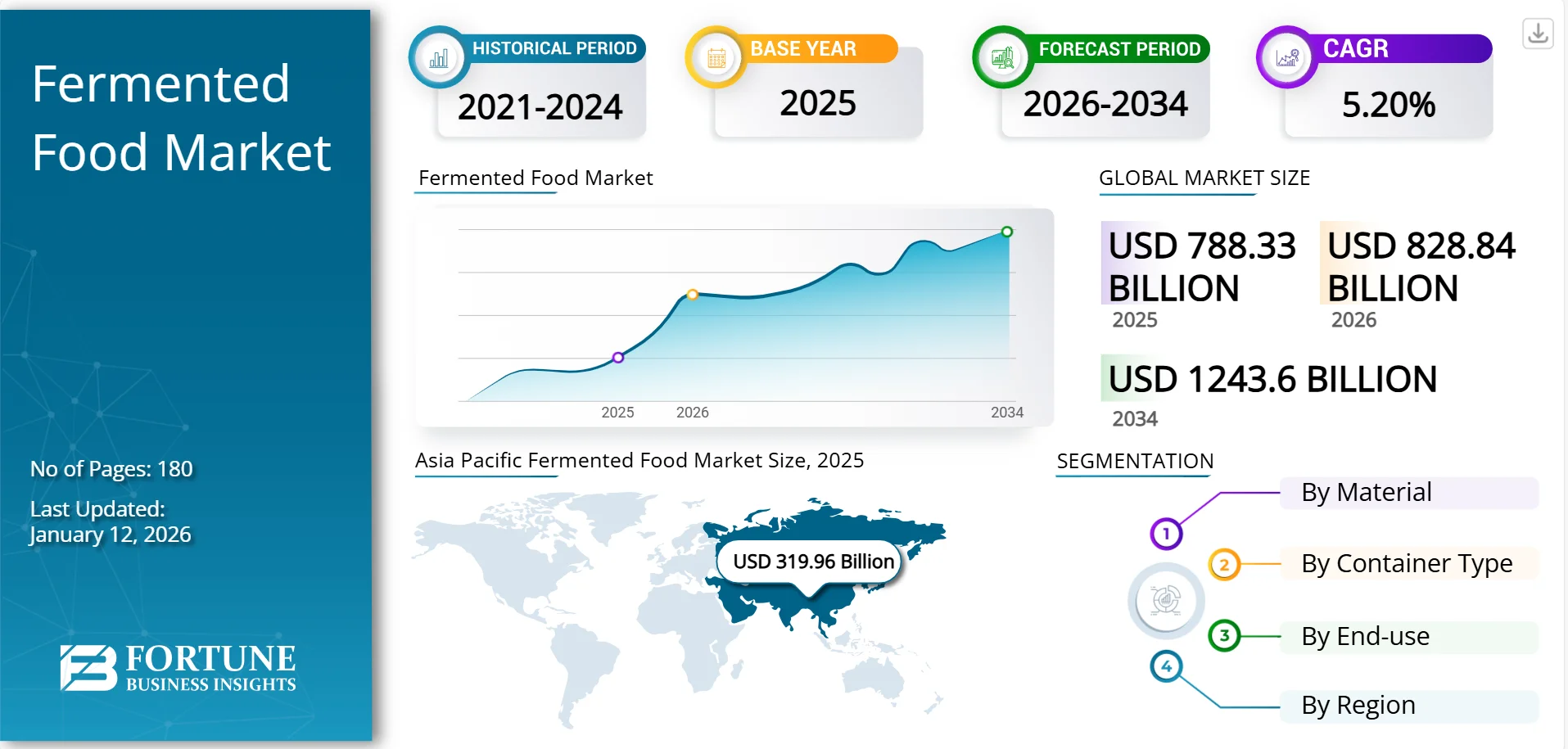
The plant-based fermented food segment is projected to be the fastest-growing, with an impressive CAGR of 8.87% through 2031, according to Mordor Intelligence's fermented foods market report.
Heritage ferments like kimchi, sauerkraut, and injera are inspiring mainstream retail launches and restaurant collaborations. Japan's fermented flavours market is being driven by rising demand for traditional ingredients like miso, soy sauce, and koji-based seasonings.
Fermentation isn't a trend anymore. It's a core kitchen competency.
Here's a number that should focus every operator's attention: for every $1 a company dedicates to combating food waste, it can anticipate a $14 return on investment — a 1,300% increase, according to WRI's business case research for Champions 12.3.
According to OysterLink's restaurant food waste research, food service companies and restaurants throw away roughly 22-33 billion pounds of food each year. On average, 4%-10% of food restaurants purchase never even reaches a customer — due to spoilage, over-preparation, and poor inventory management.
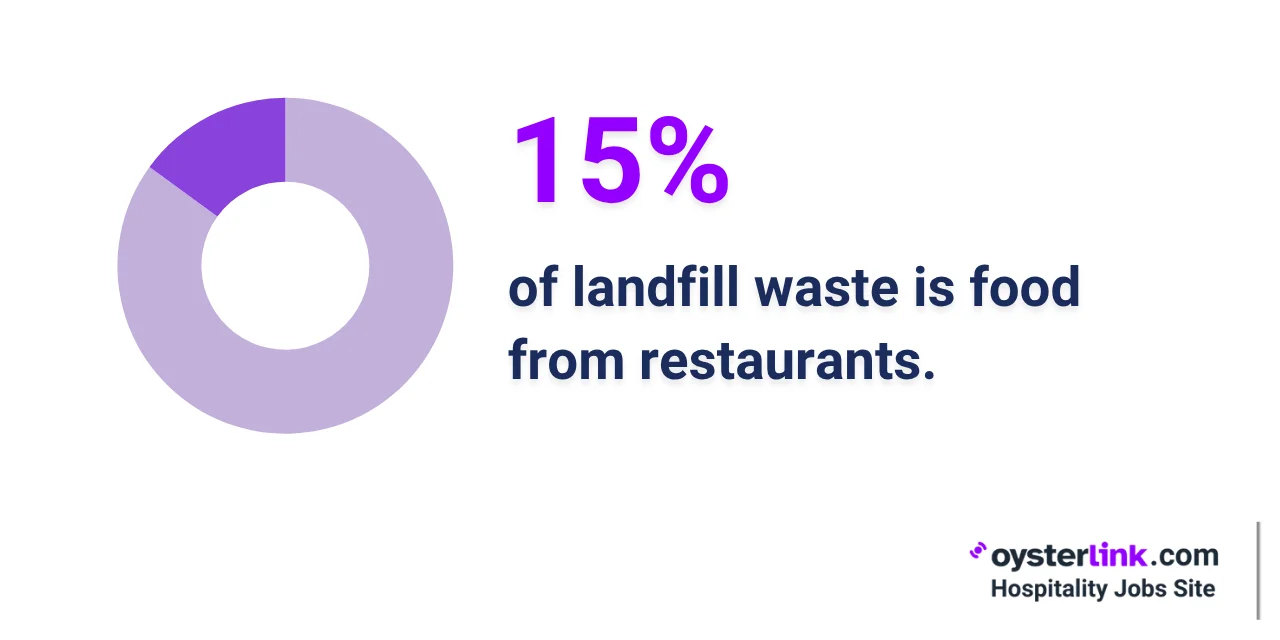
But consumer pressure is changing the equation. An overwhelming 91% of consumers prefer to purchase from businesses that reduce food waste.
Winnow and Leanpath exemplify the shift toward data-driven sustainability, using AI, IoT-enabled smart bins, and real-time analytics to enhance waste traceability and prediction.
42% of operators have improved food costing and inventory practices to reduce waste, according to Lightspeed's State of the Hospitality Industry Report.
Zero-waste restaurants in Northern Europe decide what to cook based on season and region with no fixed menu — making waste reduction part of the concept itself.
The global food waste management market is forecasted to reach USD 132.17 billion by 2034, expanding at a 5.44% CAGR, according to Towards FNB research.
Nearly three-quarters of U.S. diners care about how restaurants handle their food waste. Nearly half would be willing to spend more to eat at establishments that take deliberate steps toward reducing their waste footprint.
Zero-waste isn't a marketing advantage anymore. It's an expectation — and the operators who don't meet it are leaving money on the table.
The wellness movement has entered the kitchen — and it's backed by serious market numbers.
The global functional food and beverage market is now worth a colossal $364 billion, according to Fortune Business Insights' market report, and growing at a 10.33% CAGR. If this growth continues, it'll be worth over $793 billion by 2032.
According to a Tastewise survey of over 550,000 participants, 42.9% of consumers associate healthy food with boosting energy or muscular performance, while nearly 39% link it to mental clarity.
Stress relief has become the #1 mental health priority for global consumers, according to Innova Market Insights' Top Ten Trends 2026 press release. Adaptogens like ashwagandha and chamomile are driving new product launches across menus — with "Stress Relief" ranking as the #2 consumer food search term in Tastewise's data, trailing only "Energy."
Recess sparkling beverages combine ashwagandha and L-theanine for stress relief. Kin Euphorics blends adaptogens, botanicals, and functional mushrooms to promote mood balance. (For a deeper dive into the functional beverage revolution beyond restaurants, see our food trends for 2026.)
Wellness cafes and restaurant menus increasingly feature "mood-boosting" foods, from dark chocolate to adaptogen lattes — part of what trend forecasters call the rise of "neuroflavor."
According to the same Innova Market Insights research, more than half (59%) of global consumers say they believe gut health is very important for the entire body. Functional ingredients supporting mental clarity, stress relief, and emotional balance are driving innovation across food and beverage categories.
The global healthy foods market has reached $863 billion in 2026, according to Towards FNB research, and is projected to grow at a 10.1% annual rate through 2035.
Gen Z is driving this. 60% express interest in fiber-rich foods and beverages, signaling a generational shift toward prioritizing functional nutrition, according to Datassential's 2026 Food & Beverage Trends report.
Here's what changed: 54% of diners are now willing to pay a premium for a one-of-a-kind dining experience, according to OpenTable's 2026 Dining Trends Report.
The Immersive Dining Market was valued at USD 6.8 billion in 2025 and is projected to reach USD 16.8 billion by 2030 — a 19.8% CAGR, according to Virtue Market Research. That's nearly tripling in five years.
Americans are more likely to dine at a restaurant when it's hosting a pop-up, collaboration, or special experience in 2026. The old "sit, eat, leave" model is giving way to "come for a story, stay for the memories."
Restaurants are doubling down on experiential elements — live music, cabaret, staff-driven narratives that keep guests engaged well past dessert. Operators are reimagining unassuming spaces into destinations.
Real-time table management and spatial analytics are becoming standard, with platforms like OpenTable's reporting tools helping restaurants track table status, optimize seating, and manage guest flow to maximize per-seat revenue.
High-tech immersive dining is growing fastest, fueled by breakthroughs in mixed reality, haptic feedback, AI personalization, and spatial computing.
Guests — especially Gen Z and younger Millennials — are actively searching for meals that feel like events: immersive rooms, themed nights, surprise menus, nature escapes, chef interactions.
The Global Private Dining Experiences Market is expected to reach USD 87.1 billion by 2035, growing at a 6.3% CAGR, according to Market.us research.
Dining in 2026 isn't about the food alone. It's about the story you tell afterward.
The hyper-local movement is getting more extreme — and more data-driven.
According to the National Restaurant Association's 2026 Culinary Forecast, restaurants are deepening community ties by featuring ingredients from nearby farms and producers, emphasizing freshness and sustainability.
Hyperlocal sourcing—ingredients grown within one's town or city—yields ultra-fresh, seasonal flavors that diners can actually taste while reducing the environmental impact of long-distance transport.
In restaurants, customers now expect seasonal products, minimalistic menus, and the full use of ingredients on their plates. Hyper-local produce and seasonal dishes help maintain quality while managing costs.
QR code traceability is becoming standard. In 2026, expect hyper-local sourcing to blend with digital storytelling: a QR code tells you where the tomatoes came from, or a special exists for just one neighborhood.
Menu engineering is now as much about margins as taste and dietary trends. Restaurateurs are shrinking menus to cut waste, improve consistency, and streamline supply chains.
Seasonal rotations reduce food costs and waste while helping restaurants offer fresher, more relevant options year-round.
The same NRA culinary forecast ranks local sourcing among the Top 10 overall trends for 2026 — based on surveying hundreds of culinary professionals. Alongside it: clear menu labeling, icons, and cues that help diners make informed choices about ingredients and sustainability.
According to Datassential's 2026 Food and Beverage Trends report, 76% of consumers say detailed menu descriptions matter when trying unfamiliar foods — and 72% of diners will pay more at restaurants that prioritize sustainability.
The restaurants winning here are the ones turning local sourcing from vague promise to verifiable fact. In 2026, "local" without a story to back it up won't cut it.
The fast-casual segment is maturing — and that's creating both challenges and opportunities.
According to Technavio's market analysis, the global fast casual restaurants market will grow by USD 181.6 billion during 2025-2029, with a 16.1% CAGR. The U.S. market has now reached an estimated USD 115.5 billion in 2026.
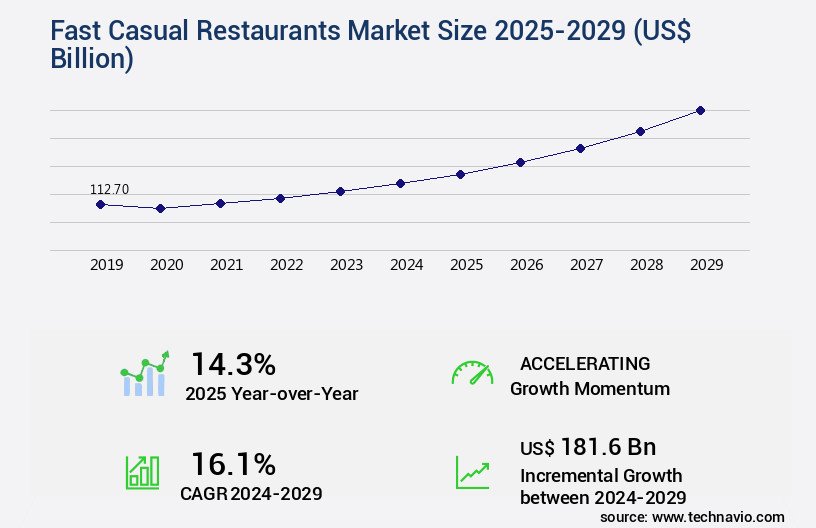
But the easy growth days are over. The U.S. fast casual restaurant market was valued at $50.6 billion in 2022 and is projected to reach $121.3 billion by 2032, according to Allied Market Research—yet after years of rapid expansion, momentum is cooling as the segment reaches maturity.
Chipotle opened its 4,000th restaurant in December 2025, with plans for 315-345 restaurants in 2025 and another 350-370 in 2026.
Shake Shack opened 45 new Company-operated Shacks in 2025, with guidance to build another 55-60 in 2026.
CAVA is showing robust growth while legacy brands like Panera face more significant challenges. The winners are chef-driven concepts with quality ingredients and design-forward spaces.
The fast casual restaurants market is projected to grow from $197.09 billion in 2025 to $350.75 billion by 2032 at an 8.5% CAGR, according to ResearchAndMarkets—but digital transformation, supply chain resilience, and menu innovation will differentiate leading brands from those left behind.
The premium fast-casual brands that win in 2026 aren't trying to be cheaper. They're delivering on the "affordable luxury" promise: quality you can taste, environments worth spending time in, at prices that feel fair for what you get.
71% of Gen Z and 68% of Millennials expect to increase their restaurant visits in the coming year, according to OpenTable's hospitality trends report—making younger generations the fastest-growing customer base for fast-casual operators.
Restaurants are becoming more than places to eat. They're becoming the new community centers.
By late 2025, restaurants are increasingly defined not by fixed lunch and dinner slots, but by how their spaces can live throughout the entire day. This shift is driven by hybrid work, blurred lines between leisure and working hours, and growing demand for a "third place" between home and the office.
The National Restaurant Association's 2026 Culinary Forecast notes that local sourcing is a top trend — restaurants are deepening community ties by featuring ingredients from nearby farms and producers.
BrewDog (Waterloo, London) transformed a 27,500 sq ft space into a multi-purpose destination with DeskDog coworking and a podcast recording studio, operating all day and attracting new audiences beyond classic peak times.
Dishoom's Permit Room integrates coworking via a partnership with Werksy, offering £1.50/hour hot-desking at locations in Brighton, Cambridge, and London — formalizing "working from a restaurant" as part of the guest's daily routine.
The Queensboro (New York) offers The Q Home Office — a $20/day workspace from 9am-5pm with bottomless coffee and lunch discounts, then shifts back into a full restaurant-bar format in the evening.
For guests, the restaurant is less a brief stop and more a setting for work, conversations, breaks, and long stays. Operators are rethinking design and spatial logic: flexible zoning, semi-private niches for meetings, reliable Wi-Fi, power outlets, and the ability to change the function of the room without a full concept reboot.
According to The Sustainable Restaurant Association, forging strong connections with your community plays a key role in any sustainability strategy, benefiting both the local area and the business.
The most successful restaurants in 2026 don't just serve food. They serve as anchors for their neighborhoods — hosting farmers markets, offering cooking classes, partnering with local nonprofits, measuring success by community impact alongside revenue.
Fixed service windows are dissolving. The restaurant of 2026 operates on the customer's schedule, not the chef's.
OpenTable's 2026 dining trends report shows a 13% year-over-year increase in 4 PM dining, with 51% of Americans wanting more happy hour and value promotions—clear evidence that traditional lunch and dinner slots no longer define when people eat out.
This shift is structural, not temporary. Hybrid work has permanently blurred the lines between leisure and working hours. Guests want a "third place" that works at 10am, 3pm, and 9pm — not just during traditional meal times.
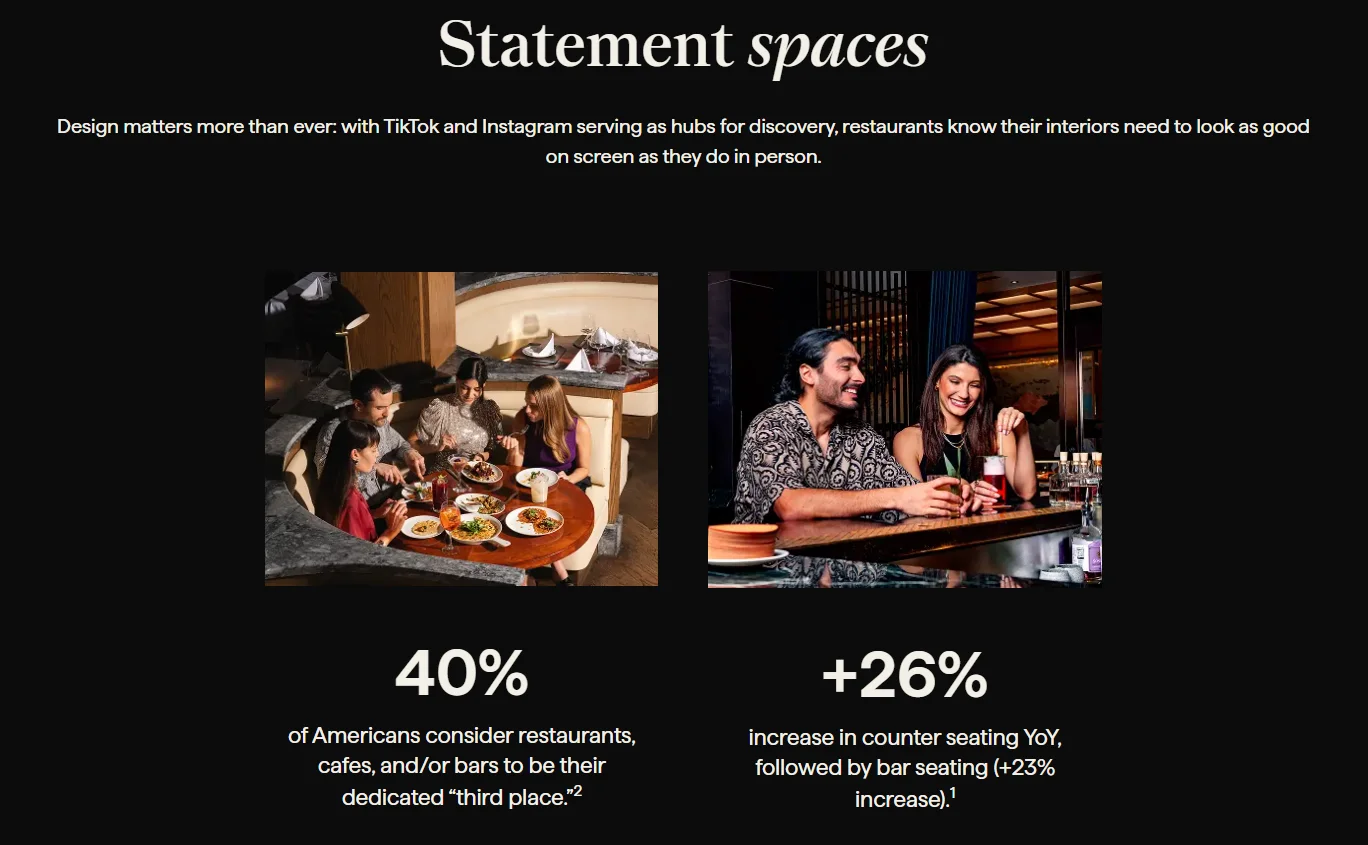
Now, restaurant operators are focusing on new opportunities to entice customers at all hours with engaging offerings, according to the National Restaurant Association.
All-day cafes are expanding beyond coffee to offer full menus throughout the day — breakfast items at 2pm, cocktails at 4pm, dinner at 5:30pm.
Flexible seating configurations allow spaces to shift from quiet morning work sessions to energetic evening dining without physical renovation.
Menu engineering for day-parts is becoming more sophisticated, with different offerings, pricing, and ambiance depending on when you arrive.
The winners in 2026 are spaces that feel appropriate at any hour. That means sound design that adapts, lighting that shifts, menus that evolve, and staff trained to read what guests need at different times of day.
Operators are investing in infrastructure: power outlets at every table, reliable Wi-Fi, privacy zones for calls, and beverage programs that work from morning coffee through late-night cocktails.
The rigid lunch-and-dinner model is giving way to continuous hospitality. Restaurants that master the all-day format will capture revenue their single-daypart competitors leave on the table.
The final shift ties everything together: consumers no longer accept claims at face value. They want proof.
According to FMI's Transparency Imperative research, 75% of consumers are more likely to switch to a brand that provides more in-depth product information, and 86% say access to complete ingredient information would result in more trust.
QR traceability, carbon footprint labeling, and real-time sourcing data are becoming standard.
The same National Restaurant Association macro trends data confirms this generational shift — younger diners in particular are demanding verifiable transparency about where their food comes from.
This isn't about marketing. It's about operational visibility that customers can access directly.
QR codes on menus now link to farm profiles, sustainability certifications, and real-time supply chain data. Scan and see exactly where your salmon was caught.
Carbon labeling is moving from niche to mainstream, with restaurants displaying the environmental impact of dishes alongside calorie counts. Recent clinical trials show that menus with ecolabels helped diners select items with 9.2% lower carbon footprints.
Blockchain-backed supply chains are emerging in premium segments, with early adopters in major U.S. coastal cities providing immutable records of sourcing claims that customers can verify via QR codes.
The restaurants winning on transparency aren't just making claims — they're building systems that let customers verify those claims independently. That requires investment in technology, supplier relationships, and data infrastructure.
In 2026, "locally sourced" without a QR code to prove it will feel as hollow as "organic" did before USDA certification. The transparency bar is rising, and operators who meet it will earn trust that translates to loyalty.
Look at these twelve trends together and a pattern emerges: restaurants are being asked to do more than ever before.
Diners want AI-powered personalization and hand-foraged ingredients. They want ghost kitchen efficiency and experiential theater. They want functional adaptogens in their food and zero-waste practices in the kitchen. They want their local restaurant to be a community hub, a coworking space, and an Instagram destination — all at prices that feel like value.
The operators who thrive in 2026 aren't trying to do everything. They're making deliberate choices about which trends align with their brand, their market, and their capabilities. They're investing in the infrastructure — the data systems, the supplier relationships, the staff training — that makes these trends sustainable rather than gimmicks.
Every trend here points in the same direction: the restaurant industry is professionalizing. The days when charm and good food were enough are ending. The winners in 2026 understand data, sustainability, experience design, and community building — and they know how to deliver all of it while actually making money.
The fundamentals haven't changed. Great food, genuine hospitality, and fair value still matter most. But the definition of what counts as "great," "genuine," and "fair" is being rewritten — and the operators who don't keep up with the new definitions are getting left behind.
Want to spot emerging restaurant trends before they hit mainstream? Check out our guide on how to identify market trends or explore what's gaining traction on our trends dashboard.
+24,000 Emerging Trends
+4,000 Breakout Apps
+70 Mega Trends
Trend Analysis Tool